

December, 2023
from the Record, Fall 2023
by Alexandra Evans
The Keepers: Alumni in Public History
Set in what Caroline Emmons, director of the Center for Public History, calls a “laboratory of history,” Hampden-Sydney has always drawn historophiles. Emmons credits this to a number of factors including the position of the College both geographically and temporally in our nation’s history as well as the strength of the Hampden-Sydney History Department.
 “Over the past 10 years, Hampden-Sydney College has graduated more history majors as a share of students than any other college or university in the nation. According to The American Historical Association, approximately 1.2 percent of undergraduates nationally majored in history between 2012 and 2022. Hampden-Sydney’s average across those ten years is 13.6 percent,” reports Elliott Associate Professor of History James Frusetta.
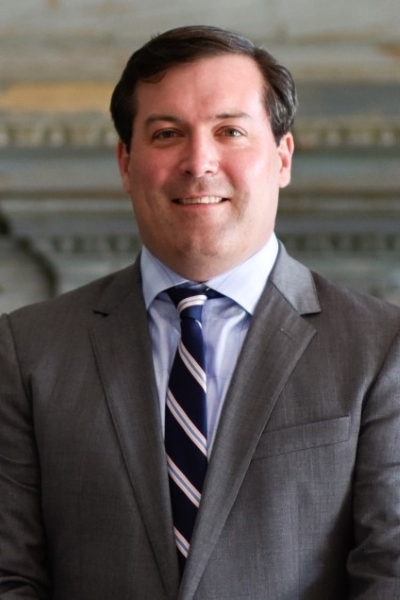
Discover how Carter Hudgins ’00 is using his history major in his profession dedicated to the preservation, interpretation, and conservation of American history.
Dr. Carter Hudgins ’00, president and CEO of Drayton Hall Preservation Trust in Charleston, South Carolina, says: “The beauty and the challenge of what we do is that you come to the table with two questions, but the answers to those two questions lead to four more questions. It’s all part of an evolution.”
Holding both master’s and doctorate degrees in history and material culture from the University of London, Hudgins expands on some of the new questions his team is trying to answer about life at Drayton Hall—an 18th century plantation in the South Carolina Low-country—a property that he started working at in high school, when he was a member of the grounds crew. “Archaeology at Drayton Hall has been reactive up to the present— meaning that we would only conduct an excavation ahead of any projects that could disrupt the archaeological record,” he explains. “But we now have a fully funded archaeology department, and we’re able to create a research strategy and set about finding answers. One of our priorities is to find the community where the enslaved people lived both in the main house and out across the landscape. We want to be as accurate and authentic as possible. Archaeology holds you to that because what you find is what happened.”
“There’s so much to learn from old properties like Drayton Hall,” Hudgins says. “For instance, Drayton Hall is the first fully executed example of Palladian architecture in the U.S. It is ground zero in the U.S. for classical design, and people are still coming to the site and examining what was built in the 1740s and why.”
“You can think of these properties almost like a grandparent.” Hudgins continues. “They’re living and breathing, maybe retired and slower, but the impact they have on us today is extremely powerful. They can provide wisdom and warning as to what was good and bad respectively, teach us what to do and what not to do, and help us move forward.