

December, 2023
from the Record, Fall 2023
by Alexandra Evans
The Keepers: Alumni in Public History
Set in what Caroline Emmons, director of the Center for Public History, calls a “laboratory of history,” Hampden-Sydney has always drawn historophiles. Emmons credits this to a number of factors including the position of the College both geographically and temporally in our nation’s history as well as the strength of the Hampden-Sydney History Department.
“Over the past 10 years, Hampden-Sydney College has graduated more history majors as a share of students than any other college or university in the nation. According to The American Historical Association, approximately 1.2 percent of undergraduates nationally majored in history between 2012 and 2022. Hampden-Sydney’s average across those ten years is 13.6 percent,” reports Elliott Associate Professor of History James Frusetta.
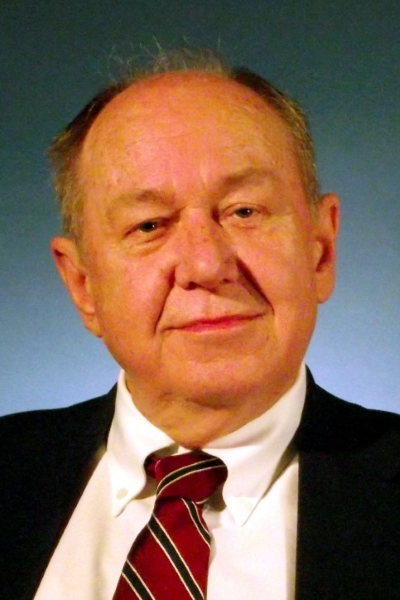
 Discover how Ed Ayres ’66, public historian at Jamestown-Yorktown Foundation, is using his history major in his profession dedicated to the preservation, interpretation, and conservation of American history.
Ed Ayres ’66 is committed to presenting history warts and all. “Understanding how complex and twisted history can be is something I would like every American to understand,” he says. After completing a master’s degree at the University of Virginia, Ayres began his career as a historian in the 1970s working with archaeologists at the College of William and Mary. In 1988, he joined the Jamestown-Yorktown Foundation as a public historian and was part of the team that created a new museum on the American Revolution at Yorktown.
Ayres’ foray into history was unexpected but nonetheless fulfilling. A patriotic man, Ayres came to Hampden- Sydney during the height of the Cold War with the goal of becoming a scientist and doing his part to protect the country and defeat communism. That is, until organic chemistry got in his way. After changing his major to history though, Ayres discovered another way to live out his patriotism: presenting the full and complete history of the nation he loves to its citizens, despite the ugly truths that history may reveal.
This path has, at times, forced Ayres to confront some of his own long-held beliefs, like when he “devoured” the Pentagon Papers and his eyes were opened to the complexity of history and politics.
“As a historian there are so many events that even I didn’t know happened until more recently, like the Tulsa Race Massacre of 1921,” Ayres admits. As he strives to broaden his knowledge of American history outside of his professional expertise in the colonial era, Ayres hopes to achieve a realistic understanding of where the nation is in achieving the American dream of life, liberty, and the pursuit of happiness for all its citizens.
Ayres explains that in order to make an informed opinion, it is important for each American citizen to learn as much as possible about our nation’s history. It is a task he believes every generation should and does undertake in its own way, leading to new understanding about America’s collective history and that history’s place in the modern world. “Every generation understands the past from their own perspective,” he says. “It doesn’t mean that their understanding is any better or worse, but it’s different. Every generation revises its understanding of the past from a modern viewpoint.”