

October, 2024
from the Record, Spring 2024
by Alexandra Evans
The ROI of H-SC: Alumni in Finance
Thinking critically and quickly is paramount to the success of a finance professional, their firm, and their clients. And nothing prepares a financial professional to undertake analysis like a Hampden-Sydney liberal arts foundation.
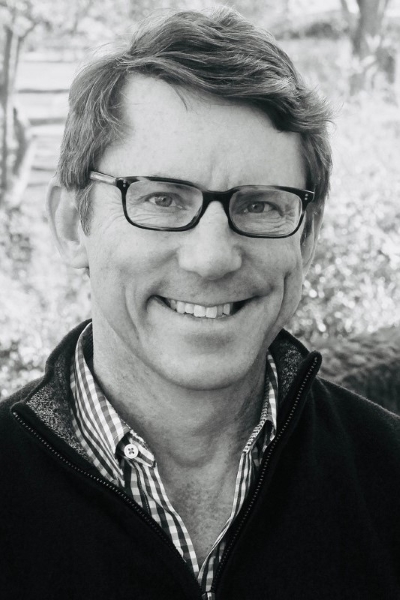
“At the end of the day, a lot of our work in finance is developing a deep understanding of what the problem that we’re trying to solve really is and if we have the right solution,” says chief compliance and risk officer of Anchorage Digital, Mark duBose ’90. “Beyond that, though, we have to ask ourselves what are strengths and the risks that this solution presents and how can we mitigate any risks?”
Risk management is ever present in duBose’s problem-solving approach. As chief compliance and risk officer of Anchorage Digital, the first and only federally chartered cryptocurrency bank, duBose is indeed tackling something new under the sun.
A classical studies major from Dallas, Texas, duBose is a prime example of the versatility of a liberal arts degree. From his first job teaching at The Lawrenceville School under headmaster Josiah Bunting—19th president of Hampden-Sydney—to the U.S. Army JAG Corps, to mergers and acquisitions attorney at Moore & Van Allen, into investment banking, and finally the world of risk management, duBose has done and seen a bit of it all. He’s using those experiences now as the well-rounded base from which he understands the problems he’s trying to solve as a leader in the new frontier that is cryptocurrency regulation.
“Crypto is a new financial product, a new way of delivering financial services,” duBose explains. “This is a new industry, and the regulators are trying to understand how to standardize it. But trying to retrofit old laws, such as the Securities Acts of 1933 and ’34, is not a viable long-term solution, so we are the boots on the ground really helping to validate the regulatory framework as it is developed. It’s a fascinating place to be and constantly puts my knowledge of financial services and regulations to its highest and best use.”
Believing in the power of blockchain solutions as a gateway to financial stability for some at-risk populations, duBose is excited to be on the front lines. “Forty percent of American households have zero credit,” he explains. “Their credit is tapped out, and they have zero savings. What happens when their car breaks down and they don’t get paid for 11 days? They might be forced to take a payday loan, which are often predatory and bury them deeper in debt.”
“But if you can do micropayments so that workers are paid by the day, they are better equipped to handle problems as they arise,” duBose continues. “Similarly, for migrants who are sending money to family members in their home countries, cryptocurrency has the potential to eliminate exorbitant foreign transaction fees and ensure more of their hard-earned money is reaching their family and not being pirated by the current system. It’s a social justice issue as much as anything.”
Effective communication skills are critical in any profession. In finance though, where concepts are complex and the stakes are so high, the financiers’ ability to communicate with their audience can make or break a deal.
“You can hire a chief of staff for organization and detail work if that’s not your forte,” duBose argues. “But you can’t bring in a proxy for critical thinking, analyzing, influencing and communicating.”
The well-roundedness imbued by a liberal arts education is precisely what opens up limitless career options in the financial field. The financial landscape is dynamic, and graduates bring flexibility and adaptability to finance roles, helping them navigate changing market conditions and evolving industry trends. The ability of finance professionals to think critically, problem solve effectively, and communicate persuasively, however, will determine how well they survive these industry evolutions.
With a liberal arts foundation, finance professionals are well-positioned to survive dynamic market conditions and flourish into the future.
“Learn how to cut through the noise. Especially in crypto, because it’s so novel there’s an immense amount of noise. Really develop an understanding of how the technology or system you’re working with operates, what problems it’s trying to solve, and its strengths and weaknesses.”
Professional Advice from Mark duBose ’90