

October, 2024
from the Record, Spring 2024
by Alexandra Evans
The ROI of H-SC: Alumni in Finance
Although Hampden-Sydney currently offers no formal finance minor or stand-alone business degree, the College has produced a cadre of leaders who are influencing the financial industry across the globe.
Nothing prepares financial professionals to undertake this analysis like a liberal arts foundation. Thinking critically and quickly is paramount to the success of a finance professional, their firm, and their clients.
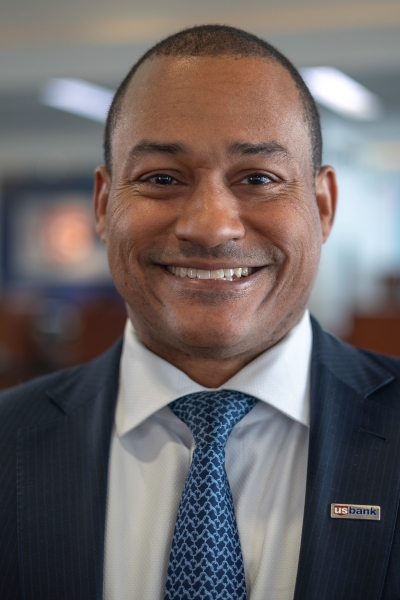
Executive vice president and head of branch and small business banking at U.S. Bank, Sekou Kaalund ’97 arrived on the Hill with visions of ending up on Capitol Hill as a senator until he discovered other ways to make an impact on the world.
“My job as a leader is to analyze the problem at hand from every useful angle and then figure out the best way to build a better mousetrap,” says Sekou Kaalund ’97, executive vice president and head of branch and small business banking at U.S. Bank. Hailing from Raleigh, North Carolina, Sekou arrived on the Hill with visions of ending up on Capitol Hill as a senator—a dream he developed at the age of five.
With that aim in mind, Kaalund pursued a classics degree, believing an understanding of the influence of Athenian democracy in our own modern Republic would help him become an effective politician. After winning a business case competition during his master of public policy program at Duke University, Kaalund realized that through a career in finance—influencing large budgets, managing scores of people, and impacting how companies show up in the communities they operate in—he could make just as big of a difference going into business as he could by going into politics. Now he applies what he learned while studying classics at Hampden-Sydney in his role as executive vice president and head of branch and small business banking at U.S. Bank.
“As they say, there’s nothing new under the sun,” Kaalund muses. “When we were going through the financial crisis in 2008, I reminisced on Tacitus’ Annals, where he details how Rome went through the same thing because they made lending cheap. Roman citizens speculated on purchasing, and the government had to do a bailout. And then there we were, 2,000 years later, dealing with the same problem. So a lot of what we do as problem-solvers is understanding how humanity has evolved and how difficult problems and tasks have been tackled over time and how those solutions aged.”
An awareness of the power of financial systems to alleviate or exacerbate common social ailments is yet another benefit of a liberal arts education. In the hands of ethical, socially minded professionals, the financial industry has immense power to transform lives for the better. And whose hands are more ethical or socially minded than those of a good man and a good citizen with a strong foundation of a liberal arts education?
“When I realized there were other ways for me to make an impact on the world around me besides running for office, I was able to focus on other—arguably more effective—avenues that I could use my talents, influence, and experience to help drive the change that’s needed,” Kaalund says.
Kaalund has inarguably effected change in his industry. While at JPMorgan Chase as head of Chase Consumer Bank for the Northeast Division, Kaalund launched and led Advancing Black Pathways, the first global corporate initiative working to develop scalable programs that address the racial wealth gap. The success of the initiative led to a historic $30 billion commitment from JPMorgan Chase.
Effective communication skills are critical in any profession. In finance though, where concepts are complex and the stakes are so high, the financiers’ ability to communicate with their audience can make or break a deal.
A liberal arts background can help students hone their critical thinking and written and interpersonal communication skills. A liberal arts background at a college with a renowned rhetoric program? Now we’re talking.
“You can pick up the technical acumen in graduate or certificate programs, but the way the Rhetoric Program trains H-SC students to communicate and influence serves them so well when they enter the corporate environment,” Kaalund confirms.
The well-roundedness imbued by a liberal arts education is precisely what opens up limitless career options in the financial field. The financial landscape is dynamic, and graduates bring flexibility and adaptability to finance roles, helping them navigate changing market conditions and evolving industry trends.
With a liberal arts foundation, finance professionals are well-positioned to survive dynamic market conditions and flourish into the future.
“Take humanities courses. You’ll pick up the technical expertise, but how you communicate, your ability to be receptive to different ideas, and how you process information will serve you well in the corporate environment with people from different backgrounds who are processing or strategizing from a different perspective. You’ll be able to see possible solutions without getting tunnel vision.”
Professional advice from Sekou Kaalund ’97